

Ultracapacitor Opportunity Charging

Project “Ultracapacitor Opportunity Charging” is supported by Enterprise Estonia from the European Regional Development Fund.
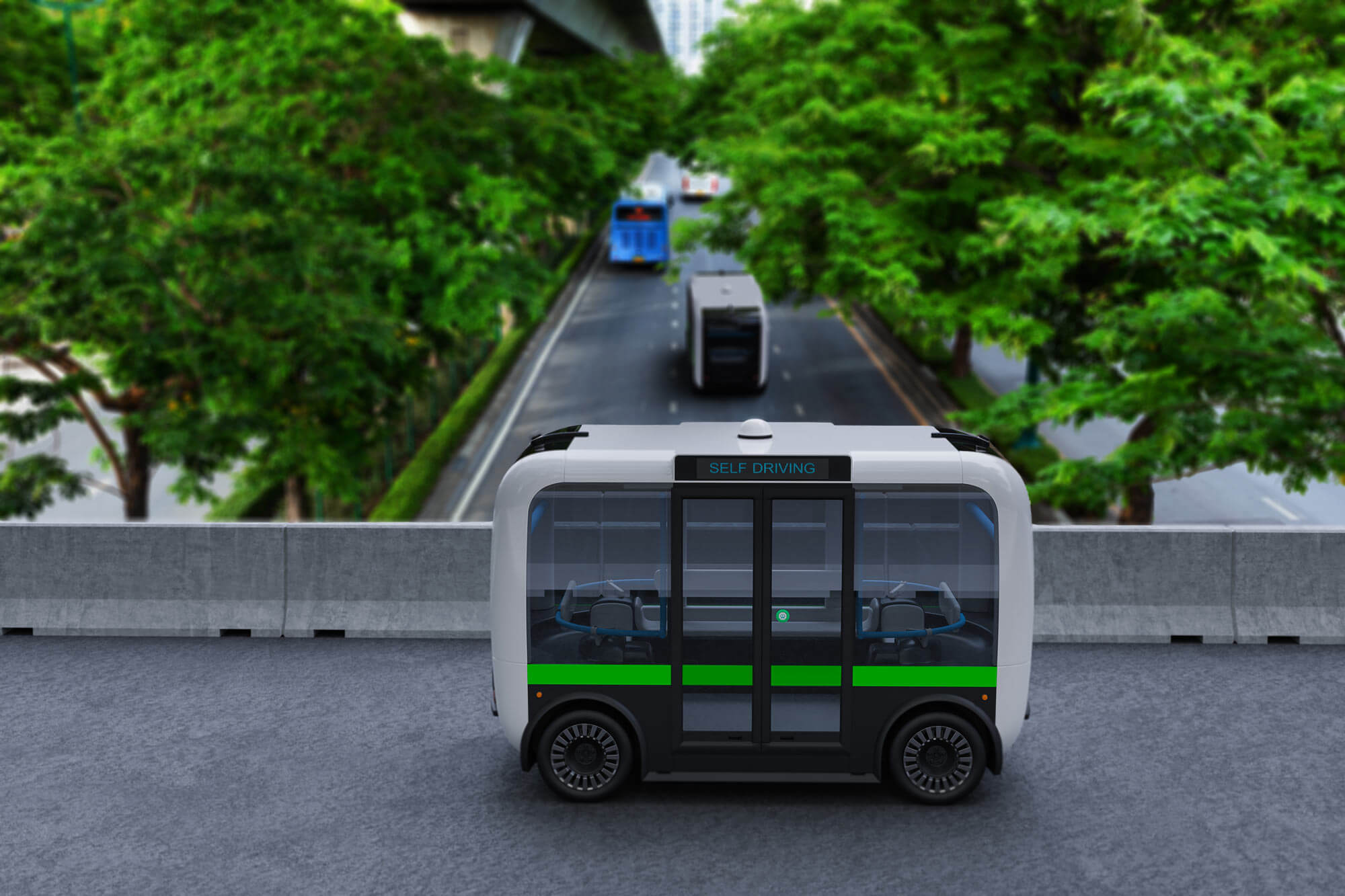
Skeleton is implementing the project “Ultracapacitor Opportunity Charging” aiming to realize a smart and sustainable Ultracapacitor-based fast-charging system for public transport vehicles. The pilot novel technology will be a catalytic example of the future of urban public transportation and intralogistics, enabling efficient routes for electrified autonomous transport of personnel and goods without the need for vehicle downtime during charging events.
Supported by Enterprise Estonia through its “Applied Research Programme”, with a 1.4 million Eur in co-funding, the project combines the novel concept of autonomous driving features and an ultracapacitor to ultracapacitor charging logic, enabling improved public transportation with low operational costs and low impact on the local grid.
The project objectives are aiming at the development of an opportunity charging system, while achieving 50% better efficiency at less than half the system cost and demonstrating a pilot opportunity charging system for autonomous vehicles in cooperation.
Project introduction
The project aims at the realization of an supercapacitor-based fast charging system for public transport vehicles, in which a vehicle is charged within a few seconds, enabling seamless operation on a service route, charging at stops as needed. The project combines the need for emission-free transport with autonomous driving features and supercapacitor-to-supercapacitor charging logic – thus enabling a public transport system with low operational costs, low impact on the local grid, and zero emissions.
A supercapacitor-based fast charging system can charge a vehicle in 5–15 seconds depending on application specifics. For transportation electrification purposes a supercapacitor-based opportunity charging system has a considerable weight advantage over the battery alternative (1–2.5 tons in an electric city bus), over 90% efficiency compared to 60–70% in traction batteries, and superior lifetime, leading to lower life cycle costs and emissions.
Project objectives
• Development of an opportunity charging system offering 50% better efficiency at less than half the system cost.
• Increasing technology maturity from TRL5 to TRL7, stopping short of development for series production of the charging units.
• Demonstrating a pilot opportunity charging system for autonomous vehicles
Project results
The project’s result will be a pilot for a novel technology relevant to the future of urban public transportation and intralogistics, enabling efficient routes for electrified autonomous transport of personnel and goods without the need for vehicle downtime during charging events.
The project addresses four major challenges for electrified automated transport of goods and persons:
• Long charging times for electric vehicles, thus limited operational timeframe resulting in a lower return on investments of autonomous solutions.
• High power requirements from the grid for fast charging systems, resulting in higher energy costs for the operator and installation of unnecessary hardware at the grid level.
• Inefficient and volatile energy storage solutions (e.g. Lithium-ion batteries) for high-power charging operations, limiting the application, especially in regard to safety.
• Cost of charging solutions, especially if quick-charging is done directly from the grid.
The challenges are overcome by a combination of the following major innovations:
• High power quick charging between two Ultracapacitor based systems with low power grid requirements.
• Automated charging between stationary and vehicle systems, enabling non-stop operation.
• Pre-charging communication system between the autonomous vehicle and charging station.
• Design-in of next-generation supercapacitor technology for extended routes between charging points.